In Hawaii, impaired-driving offenses are prosecuted under the charge Operating a Vehicle Under the Influence of an Intoxicant (OVUII). Even a first arrest can lead to immediate administrative license revocation and potential criminal penalties if a conviction follows.
Hawaii enforces OVUII laws through two separate legal processes:
- Administrative license revocation handled by the Administrative Driver’s License Revocation Office (ADLRO)
- Criminal court proceedings under Hawaii Revised Statutes §291E-61
Because these proceedings operate independently, drivers may face license consequences before a criminal case is resolved.
Understanding how BAC limits, refusal rules, sentencing ranges, and repeat-offense penalties work can help drivers recognize what is at stake after an OVUII arrest.
Legal BAC Limits in Hawaii
Blood Alcohol Concentration (BAC) measures the percentage of alcohol in a person’s bloodstream. Hawaii law sets different thresholds depending on the driver category.
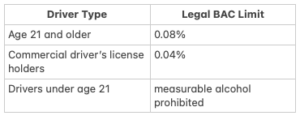
Importantly, a driver may still be charged with OVUII even below 0.08% if law enforcement determines impairment by alcohol, drugs, or a combination of substances.
What Qualifies as an OVUII Charge in Hawaii?
A person may be charged with OVUII if they operate a vehicle while:
- having a BAC at or above the legal limit
- impaired by alcohol
- impaired by prescription medication
- impaired by illegal drugs
- impaired by a combination of substances
Observed impairment alone may support a charge even without chemical test results.
Administrative License Revocation (ADLRO) After an Arrest
Following an OVUII arrest, the Administrative Driver’s License Revocation Office begins a separate administrative process that determines whether driving privileges will be revoked.
This process:
- begins shortly after arrest
- operates independently from criminal court proceedings
- can result in license revocation before trial
- allows drivers a limited time to request a hearing
Failing to request an ADLRO hearing within the statutory deadline may allow revocation to proceed automatically.
Penalties for a First OVUII Offense in Hawaii
If a person is convicted of a first OVUII offense, courts may impose penalties that typically include:
- 48 hours to 5 days of jail or 72 hours of community service
- fines ranging from approximately $250 to $1,000
- completion of a 14-hour substance abuse rehabilitation program
- license revocation typically around one year
- possible installation of an ignition interlock device depending on case factors
The exact penalties imposed depend on circumstances such as BAC level, prior history, and whether aggravating factors were present.
Aggravating Factors That May Increase Penalties
Certain factors can increase sentencing exposure in OVUII cases, including:
- BAC of 0.15% or higher
- a minor passenger in the vehicle
- involvement in a collision
- prior OVUII convictions
- refusal to submit to chemical testing
These circumstances may result in additional restrictions or longer revocation periods.
Second OVUII Offense Penalties
A second OVUII conviction within the statutory look-back period carries increased penalties that may include:
- 5 to 30 days of jail or 240 hours of community service
- fines between approximately $1,000 and $3,000
- participation in substance abuse treatment
- longer license revocation period (often 2–3 years)
- ignition interlock requirements
Repeat offenses are treated more seriously under Hawaii law.
Third OVUII Offense and Felony Charges
A third OVUII offense within the statutory timeframe may be charged as a felony OVUII offense under Hawaii law.
Felony-level consequences may include:
- extended license revocation
- mandatory incarceration
- court supervision
- required treatment programs
- long-term criminal record consequences
Felony classification significantly increases the seriousness of the case.
Refusing a Breath, Blood, or Urine Test in Hawaii
Hawaii’s implied consent law requires drivers lawfully arrested for OVUII to submit to chemical testing.
Refusing testing may result in administrative license revocation periods that are typically longer than those associated with test results:
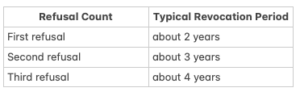
These administrative consequences occur separately from criminal court proceedings.
Ignition Interlock Device Requirements
Courts may require installation of an ignition interlock device (IID) depending on:
- BAC level
- prior offenses
- eligibility for conditional driving privileges
An IID requires the driver to provide breath samples before and during vehicle operation.
Similar Link: Hawaii Firearm Laws Explained: A Complete Guide for First-Time Gun Owners
OVUII Laws for Drivers Under Age 21
Drivers under age 21 may not operate a vehicle with measurable alcohol in their system.
Consequences may include:
- license revocation
- mandatory education programs
- fines
- additional court requirements
Hawaii enforces strict under-21 impaired-driving rules.
OVUII Laws for Commercial Drivers
Commercial driver’s license holders are subject to stricter standards.
Consequences may include:
- lower BAC threshold of 0.04%
- possible CDL disqualification
- employment-related consequences
Commercial drivers face heightened regulatory expectations.
Read More: When Should You Contact a Criminal Lawyer in Honolulu After an Arrest?
Long-Term Consequences of an OVUII Conviction
An OVUII conviction may affect multiple areas of a person’s life beyond immediate penalties.
Potential long-term consequences include:
Driver’s license restrictions
Revocation periods may affect commuting and employment mobility.
Insurance premium increases
Insurance carriers frequently increase rates after impaired-driving convictions.
Employment background checks
Certain industries evaluate criminal and driving histories.
Professional licensing implications
Some regulated professions require disclosure of convictions.
Why Legal Representation Matters in OVUII Cases
An OVUII arrest does not automatically result in a conviction. Legal defenses may exist depending on:
whether the traffic stop was lawful
how field sobriety testing was conducted
whether chemical testing procedures were properly followed
whether administrative deadlines were observed
An experienced dui lawyer hawaii residents trust can evaluate both the administrative license revocation process and the criminal court case to determine available legal options and identify potential defense strategies.
Frequently Asked Questions About Hawaii DUI / OVUII Laws
What is the legal BAC limit in Hawaii?
The legal limit is 0.08% for drivers age 21 and older and 0.04% for commercial drivers. Drivers under age 21 may not operate a vehicle with measurable alcohol in their system.
What does OVUII mean?
OVUII stands for Operating a Vehicle Under the Influence of an Intoxicant, the legal term used in Hawaii impaired-driving cases.
Can I lose my license after a DUI arrest in Hawaii even before court?
Yes. The Administrative Driver’s License Revocation Office may revoke driving privileges through a separate administrative process independent of criminal court proceedings.
Is jail required for a first OVUII conviction?
Courts may impose either jail time or community service depending on case circumstances.
Does refusing a breath test prevent charges?
No. Refusing chemical testing may lead to longer administrative revocation periods and does not prevent prosecution.
Do penalties increase for repeat offenses?
Yes. Repeat offenses carry longer revocation periods, higher fines, and additional sentencing exposure.
Can prescription medication lead to an OVUII charge?
Yes. Drivers may be charged if prescription medication impairs their ability to operate a vehicle safely.
Can an OVUII charge become a felony in Hawaii?
Yes. A third offense within the statutory timeframe may be prosecuted as a felony OVUII offense.
Legal Disclaimer
This article is provided for general informational purposes only and does not constitute legal advice. OVUII penalties in Hawaii depend on the specific facts of each case. Individuals facing charges should consult a qualified criminal defense attorney for guidance regarding their situation.
