
Police questioning can feel intimidating—even if you believe you did nothing wrong. In Hawaii, what you say during an interview or interrogation can directly affect whether charges are filed and how your case unfolds later in court. A skilled criminal lawyer plays a critical role in protecting your constitutional rights, preventing self-incrimination, and ensuring law enforcement follows proper procedures.
This guide explains how a criminal lawyer safeguards you during police questioning and what steps you should take immediately if officers want to speak with you. ⚖️
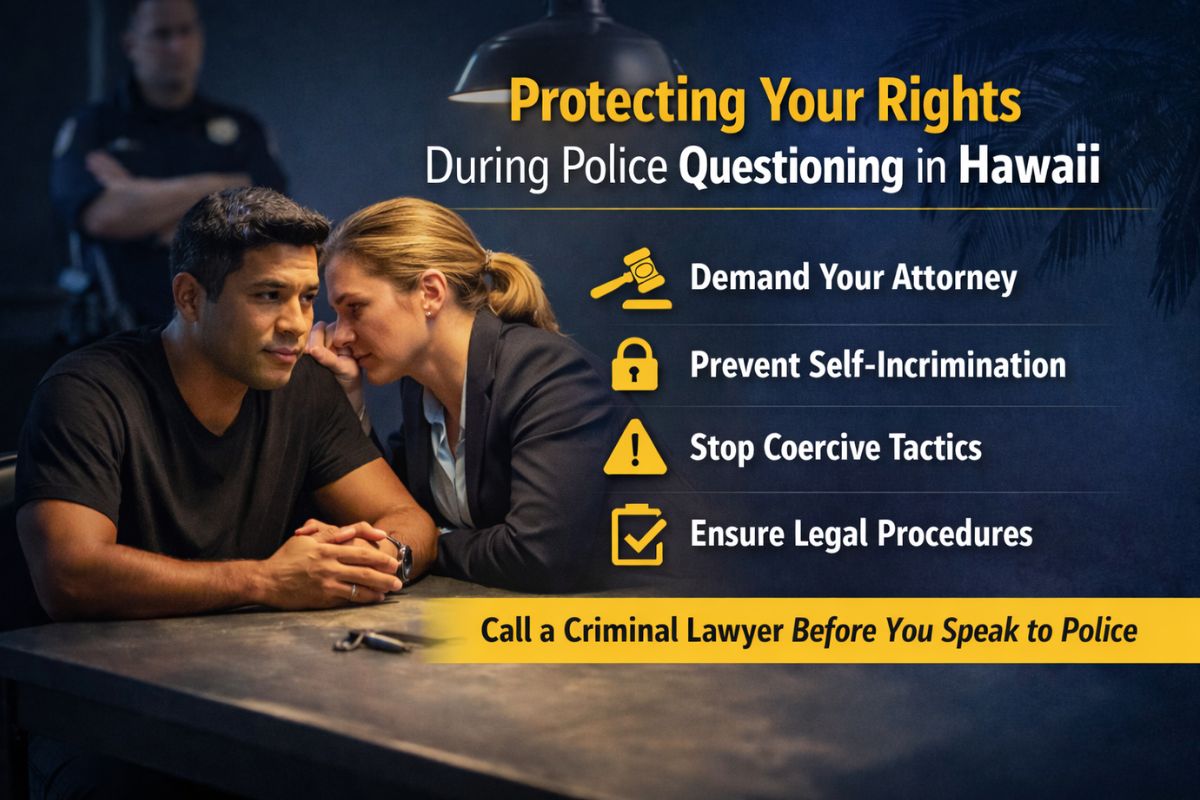
Why Police Questioning Is a Critical Stage in a Criminal Case
Police questioning is not always informal conversation. Officers are often:
- Collecting evidence
- Testing inconsistencies
- Looking for admissions
- Establishing timelines
- Building probable cause for arrest
Even casual remarks can become evidence. In Hawaii criminal cases, statements made before speaking with a lawyer frequently appear later in:
- arrest reports
- charging documents
- plea negotiations
- courtroom testimony
A criminal defense attorney helps ensure your rights remain protected from the very first interaction. 🛡️
Your Rights During Police Questioning in Hawaii
If police question you in Hawaii, you have several important constitutional protections.
1. The Right to Remain Silent
You are not required to answer investigative questions beyond basic identification information. A criminal lawyer will advise you when remaining silent is the safest strategy.
Remaining silent:
- cannot legally be used as proof of guilt
- prevents accidental self-incrimination
- protects you from misleading statements being recorded
2. The Right to an Attorney
You can request legal counsel at any time during questioning.
Once you say:
“I want to speak with a lawyer.”
Police questioning must stop until your attorney is present.
A criminal lawyer ensures officers respect this right and do not continue improper questioning.
3. Protection Against Coercive Questioning
Law enforcement cannot legally:
- threaten you
- promise reduced penalties
- pressure you into confessions
- misrepresent your legal rights
If they do, your lawyer may later challenge the admissibility of statements in court.
How a Criminal Lawyer Protects You Before Questioning Begins
Many people assume they should wait until after arrest to contact a lawyer. That is a mistake.
A Hawaii criminal defense attorney can:
- communicate directly with investigators
- clarify whether you are a witness or suspect
- prevent voluntary interviews that carry risk
- prepare you if questioning is unavoidable
Early representation often prevents charges altogether in some situations. 📌
How a Criminal Lawyer Protects You During Interrogation
When present during questioning, your attorney actively monitors the process.
They help by:
Preventing Self-Incriminating Statements
Lawyers recognize risky questions designed to produce admissions. They may advise you not to answer certain questions.
Ensuring Police Follow Legal Procedure
Your attorney watches for violations such as:
- ignoring your request for counsel
- continuing questioning after silence invoked
- improper recording practices
- misleading legal explanations
Procedural violations can weaken the prosecution’s case.
Clarifying Misunderstood Statements
Sometimes officers interpret responses incorrectly. Your lawyer can immediately correct misinterpretations before they become official evidence.
Protection Against Misuse of Miranda Rights
Police must inform you of your rights before custodial interrogation. These are commonly known as Miranda rights.
However:
- not every conversation counts as custodial interrogation
- officers may delay formal warnings
- suspects often misunderstand when rights apply
A criminal lawyer determines whether questioning was legally valid and whether statements should be excluded from court evidence.
When Police Say “You’re Not Under Arrest”
This situation creates the greatest risk.
If officers say:
“We just want to ask a few questions.”
You may still be a suspect.
A criminal lawyer helps determine:
- whether questioning is voluntary
- whether you can leave
- whether answering questions benefits your case
Often, declining to speak without counsel is the safest option.
How Early Legal Representation Can Influence Charging Decisions
In Hawaii, prosecutors review police reports before filing formal charges. Statements made during questioning heavily influence this decision.
An experienced criminal defense attorney may:
- present your version of events early
- correct inaccurate assumptions
- provide supporting evidence
- discourage weak charges from being filed
This stage can shape the entire outcome of your case. 📂
What To Do If Police Contact You for Questioning in Hawaii
Follow these steps immediately:
- Stay calm and respectful
- Provide identification if required
- Do not answer investigative questions
- Request a criminal lawyer
- Avoid discussing the situation with others
- Do not post anything on social media
These steps protect both your rights and your defense strategy.
Common Mistakes People Make During Police Interviews
Many individuals unintentionally harm their case by:
- trying to “explain everything”
- assuming cooperation guarantees release
- answering speculative questions
- guessing timelines
- speaking without legal advice
A criminal lawyer prevents these errors before they create long-term consequences.
Why Local Hawaii Criminal Defense Experience Matters
Hawaii’s legal environment includes:
- state-specific criminal procedures
- local prosecutorial policies
- island court scheduling practices
- jurisdiction-specific enforcement patterns
A lawyer familiar with Hawaii courts understands how questioning practices affect real cases in the state system—not just general U.S. procedures. 🌺⚖️
Final Thoughts
Police questioning may seem routine, but it is one of the most decisive stages in any criminal investigation. What happens during this period can determine whether charges are filed and how strong the prosecution’s case becomes.
A qualified criminal lawyer in Hawaii protects your rights by:
- preventing self-incrimination
- ensuring lawful questioning procedures
- advising when to remain silent
- shaping early defense strategy
- safeguarding your future legal position
If police request to speak with you—even informally—seeking legal guidance immediately is one of the most important decisions you can make.
